Transit Ads vs Facebook Ads: 2026 CPM Breakdown
Updated: Jan 26
Your CFO has probably been asking pointed questions about your Facebook ad spend this year. And honestly? They're right to ask. Digital advertising costs have been climbing steadily, and as we head into 2026, you're paying more to reach fewer people who are scrolling past your content at lightning speed.
That's why a lot of marketers are taking a second look at the physical world. When you compare the actual CPM (Cost Per Thousand Impressions) of transit advertising to what you're paying on Meta's platforms, the numbers are hard to ignore.
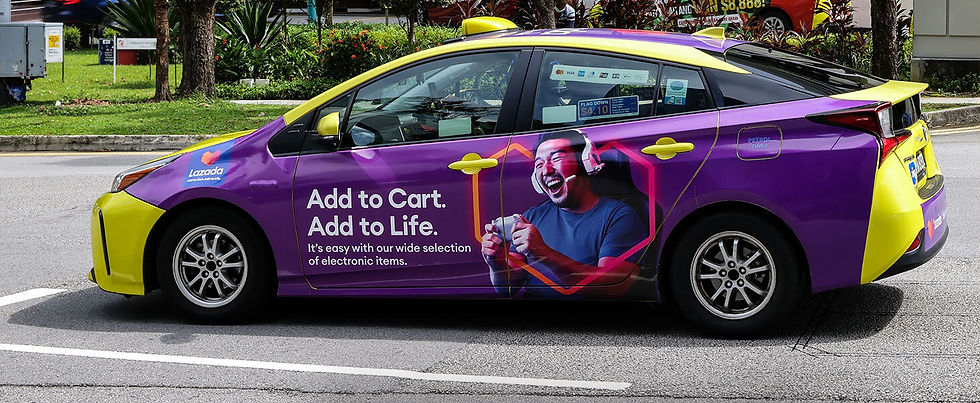
The CPM Reality Check: What You're Actually Paying
Let's get specific. Right now, the average CPM for a Facebook feed ad runs between $12 and $15 for most targeting. If you're going after executives or high-intent buyers in competitive industries, you're closer to $25 or more per thousand impressions.
Transit advertising? You're typically looking at $2 to $5 per thousand impressions.
But raw cost isn't everything. What really matters is the quality of each impression.
The Difference Between Captive and Distracted
Think about how people actually use social media. Someone sees an ad on Instagram, and their thumb is already moving to scroll past it. They're filtering out anything that looks like an ad before they even process what it says.
Now compare that to someone standing on a subway platform at 8:30 in the morning, or stuck in traffic behind a bus. They're bored. They're looking for something—anything—to occupy their attention for the next few minutes. And here's the thing: they can't swipe away a bus ad. There's no ad blocker for a train station wall.
You've got someone who's actually looking at your message versus someone who's actively trying to avoid it. That changes everything.
Why Physical Ads Still Carry Weight

There's another factor that goes beyond the media metrics. It's about how people perceive your brand.
Anyone can set up a Facebook ad with a credit card and fifty bucks. The barrier is basically zero. But when someone sees your brand on the side of a bus or taking over a subway station, that registers differently in their mind.
It says: "This company is real. They're established. They're part of the city."
You don't get that same weight from a square image on someone's phone, no matter how good your creative is.
The Legitimacy Factor
This perception gap matters more than most marketers realize. Transit advertising suggests scale and staying power. It's the difference between a pop-up shop and a storefront that's been around for years. People notice that, even if they don't consciously think about it.
When to Use Transit ads or Social Media Channel
So should you ditch Facebook entirely? No. Each has its place.
Facebook ads work best when:
You need immediate conversions you can track
You're running a time-sensitive promotion
You want to target very specific audience segments
You need to test different messages quickly
Transit advertising makes sense when:
You're building awareness over time
You want to reach professionals during their commute
You're trying to lower your overall Customer Acquisition Cost
You need to establish presence in specific markets
The approach that's working for a lot of brands right now? Use transit to build recognition at a fraction of the digital CPM, then follow up with targeted digital campaigns to close the deal.
Stop overpaying for clicks that don't convert. Check Transit Advertising Rates & Availability
Rethinking Your Budget Split

The real opportunity isn't choosing one over the other. It's about not putting all your money into digital channels where costs keep going up and attention keeps getting harder to capture.
Here's an example: if you're spending $50,000 per month on Facebook ads at an average CPM of $15, you're getting about 3.3 million impressions. Move $15,000 of that budget to transit advertising at a $3.50 CPM, and you're adding over 4 million impressions—impressions that can't be skipped or blocked.
Your total reach increases. Your blended CPM drops. And you've built real-world presence that makes your digital ads perform better when people do see them online.
Real Results from Transit Campaigns
A few examples show how this actually plays out:
A local coffee chain put ads on buses and subway stations near office districts. Simple, bold messages with QR codes linking to discounts. The result? Foot traffic increased 15% over three months.
A tech company launched a new product with transit ads in major cities, targeting commuters who matched their customer profile. The physical presence boosted online searches and social media mentions by 20%.
These aren't theoretical numbers. Transit ads can support your broader marketing goals in measurable ways.
Getting Started
If you're ready to test transit but aren't sure where to begin, it's more straightforward than most people think. You don't need a massive national campaign to see results. Strategic placement in the right markets can get you immediate visibility with your target customers.
The key is matching your placement to where your customers actually are—the commuter routes, neighborhoods, and transit lines they use every day.
Ready to fix your CPM? We help brands move budget from digital to physical without the headache. Book a Strategy Call and let's map out a transit route that hits your audience.
Looking to diversify your advertising mix as we head into 2026? Transit advertising offers CPMs as low as $2-5 compared to Facebook's $12-25, with audiences that can't scroll past your message. Learn how to integrate out-of-home advertising into your marketing strategy for better ROI and lasting brand impact.


Comments