Types of Airport Advertising
Airport advertising includes many different formats placed inside and around airports. Each format appears in a specific location and reaches travelers at a specific moment in their journey.
This guide explains the most common airport advertising types, where they appear, and what they are typically used for.
For a full definition of airport advertising, read how airport advertising work in 2026

What Are the Types of Airport Advertising?
Types of airport advertising are the different ways brands can display ads in an airport.
Most airport advertising formats fall into four groups:
· Terminal display advertising
· Digital screen advertising
· Journey-path advertising (walkways, escalators, jet bridges)
· Premium and high-impact advertising (lounges and activations)
This structure helps you understand formats without mixing in pricing, creative rules, or campaign planning.
Terminal Display Advertising
Terminal display advertising includes static ads placed in the main indoor areas of the airport. These ads are usually printed and installed in fixed frames.
Travelers see these ads while checking in, lining up, walking through corridors, or waiting near gates.
Lightboxes and Backlit Displays
Lightboxes are illuminated frames that hold printed posters. They are common because they stay bright and readable in different lighting conditions.
Where they appear:
· Check-in halls
· Security queue areas
· Main corridors
· Gate waiting zones
What they are used for:
· Brand awareness messages
· Simple product promotions
· Strong visuals with short text
Why is this format common:
· It is easy to spot
· It stays consistent all day
Wall Panels and Framed Posters
Wall panels are printed ads mounted on walls or inside frames. They are often used where people walk past slowly or stand in lines.
Where they appear:
· Terminal corridors
· Near elevators and escalators
· Near restrooms and food areas
What they are used for:
· Clear brand messaging
· Local service promotions
· Directional brand presence along long walkways
Large Format Terminal Branding

Large format terminal branding includes big visual placements that cover wide surfaces. These placements are designed to be seen from far away.
Where they appear:
· Central terminal halls
· High ceilings and large wall faces
· Above open seating areas
What they are used for:
· Major brand presence
· Launch messaging at scale
· Simple brand statements
This format usually works best when the message is short and the design is very clear.
Digital Screen Advertising in Airports
Digital airport advertising uses screens to show ads as images or videos. These screens can rotate multiple advertisers.
Digital screens are usually placed where travelers naturally pause and look around.
Where they appear most often:
· Near security exits
· Above concourses
· Near gate seating
· At terminal intersections
What they are used for:
· Time-based messaging
· Multiple creatives in one campaign
· Video or motion content
Important note:
This page explains digital formats at a high level only. A deeper guide is covered in digital airport advertising → {Digital Airport Advertising & Programmatic DOOH}.
Standard Digital Screens
These are the most common digital placements. They show rotating ads and usually run on fixed schedules.
When travelers see them:
· While walking to gates
· While waiting near boarding areas
· While passing major terminal junctions
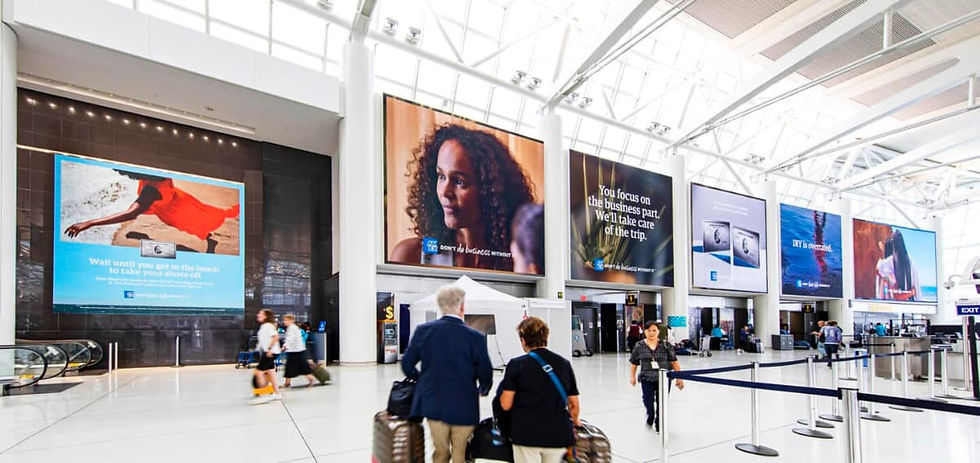
Video Walls and Large Digital Displays
Video walls are bigger than standard screens and can dominate a terminal space. They are often used for high-visibility brand presence.
Where they appear:
· Main terminal halls
· Large waiting areas
· Premium terminal zones
These displays are usually used for visually strong campaigns with minimal text.
Baggage Claim Advertising
Baggage claim advertising appears where travelers wait for their luggage. This is a high-attention moment because travelers are standing still and facing the baggage belts.
Where it appears:
· Baggage belt panels
· Carousel wraps
· Nearby walls and columns
· Screens above the claim area
What it is used for:
· Local services and transport
· Hotels and tourism messaging
· Retail and shopping reminders
· Brand awareness after arrival
Why ads at baggage claim are important:
· Travelers often wait several minutes
· The space is repetitive and less cluttered
· People look in one direction for long periods
Journey-Path Advertising
Journey-path advertising includes ads placed along the paths travelers must take to reach gates or exit the airport. These placements work because travelers cannot avoid the route.
This group includes walkway ads, escalator ads, and jet bridge ads.
Walkway and Corridor Advertising
These ads appear along long corridors and moving walkways. Travelers see them repeatedly during a single trip.
Where they appear:
· Connecting tunnels
· Long hallways between terminals
· Moving walkway sides and walls
What they are used for:
· Brand reinforcement across the journey
· Simple repeated messages
· Directional visibility toward gates
Escalator and Elevator Area Advertising
These ads appear at vertical movement points where people slow down and look around.
Where they appear:
· Escalator side panels
· Elevator lobbies
· Stairwell entry areas
What they are used for:
· High recall placements
· Short and bold messaging
· Visual branding in transition zones
Jet Bridge Advertising
Jet bridges are the enclosed walkways that connect the terminal gate to the aircraft. Travelers see jet bridge ads at a time when they are focused and moving slowly.
Where it appears:
· Jet bridge walls
· Entry and exit points near the aircraft door
What it is used for:
· Final pre-flight brand impression
· Premium brand association with travel
· Short statements and strong visuals
Airport Lounge Advertising
Airport lounge advertising appears inside lounges that serve premium travelers. These areas are quieter, less crowded, and usually have longer dwell time.
Where it appears:
· Screens inside lounge seating zones
· Wall panels near dining areas
· Sponsored sections or branded amenities
What it is used for:
· Business-focused messaging
· Premium product positioning
· Financial, technology, and luxury brand presence
This section describes the format only. Creative guidance is covered in airport advertising best practices → {Best Practices for Airport Advertising}.
Experiential and High-Impact Airport Advertising
Experiential advertising includes interactive or physical brand setups designed to attract attention. These placements are usually temporary and are placed in open areas where foot traffic is high.
Common experiential formats include:
· Product showcases
· Interactive screens or kiosks
· Photo spots and branded installations
· Sampling counters and pop-up booths
Where they appear:
· Central terminal halls
· Near major walkways
· Near retail and food courts
What they are used for:
· Product discovery
· Brand engagement
· High-impact visibility during peak seasons
This format is often planned as part of a broader campaign approach. For planning, read airport advertising campaign → {How to Plan an Airport Advertising Campaign}.
Exterior Airport Advertising
Exterior airport advertising appears outside terminals and on access roads around the airport. These ads can reach travelers and also people picking up or dropping off passengers.
Where it appears:
· Drop-off and pick-up zones
· Parking shuttles and entrances
· Airport approach roads
· Exterior building faces
What it is used for:
· Broad visibility before entry
· Local brand awareness
· Event promotion and announcements
How Brands Choose the Right Airport Advertising Format?

Brands choose formats based on three simple questions:
1. Where will the traveler spend the most time?
2. At what moment should the message appear?
3. Does the message need static visibility or motion?
Format selection becomes much easier when you map formats to the traveler journey.
For step-by-step planning, read airport advertising campaign → {How to Plan an Airport Advertising Campaign}.
Final Thoughts
Airport advertising is not one format. It is a set of placements that match how travelers move through airports.
Terminal displays build steady visibility. Digital screens add movement and flexible messaging. Journey-path placements keep brands visible from one area to the next. Baggage claim reaches people when they are standing still. Lounges and activations support premium presence and deeper engagement.
If you choose formats based on traveler movement and the moment you want to influence, you can build a clear airport advertising presence without confusion.
Next, you can explore goals and impact in benefits of airport advertising → {Benefits of Airport Advertising} and budgeting considerations in airport advertising costs → {Airport Advertising Costs & Pricing}.
Frequently Asked Questions About Types of Airport Advertising
What types of airport advertising are available?
Common types include terminal displays, digital screens, baggage claim ads, walkway ads, lounge advertising, experiential activations, and exterior placements.
Where can brands advertise inside an airport?
Brands can advertise in check-in halls, security areas, corridors, gate lounges, baggage claim, and premium lounges.
What is the most common airport advertising format?
Lightboxes and framed displays are common because they fit many airport areas and stay visible all day.
What is digital airport advertising?
Digital airport advertising uses screens to show rotating ads, including images and videos. Learn more in digital airport advertising → {Digital Airport Advertising & Programmatic DOOH}.
Are airport advertisements static or digital?
Airport ads can be static, digital, or a mix of both depending on the airport and location.

Comments