Top Airport Ads in Digital Out-of-Home and Programmatic DOOH
Updated: Sep 29
Digital airport advertising uses digital screens inside airports to display brand messages. These screens are placed in terminals, walkways, lounges, and baggage claim areas where travelers spend time waiting or moving slowly.
Programmatic digital out-of-home allows advertisers to buy and manage digital airport ads using automated technology. Together, digital airport advertising and programmatic DOOH help brands deliver more flexible, timely, and measurable campaigns inside airports.
This guide explains how digital airport advertising works, how programmatic DOOH applies to airports, and how these technologies support modern airport advertising campaigns.
What Is Digital Airport Advertising?

Digital airport advertising refers to advertising displayed on digital screens located inside airport environments.
These screens can show static images, motion visuals, or rotating messages. Content can be updated without replacing physical materials.
Digital airport advertising allows brands to change messages quickly and maintain consistent quality across multiple locations.
How Digital Airport Advertising Works in Airports?
Digital screens inside airports are connected to content management systems. These systems control what message appears, where it appears, and when it appears. Ads can rotate with other brands or appear at specific times of the day.
Because airports have long dwell time, digital screens benefit from repeated exposure during a single traveler journey.
What Is Programmatic DOOH in Airports? And How it Works?
Programmatic DOOH uses automated platforms to buy and deliver digital out-of-home advertising.
In airports, programmatic technology allows brands to purchase digital screen inventory without manual booking. Campaigns can be adjusted based on timing, location, or audience logic.
Programmatic DOOH does not replace digital airport advertising. It controls how digital inventory is bought and optimized.
Programmatic airport advertising uses demand side platforms to manage ad delivery.
Advertisers set rules such as location, time window, and duration. The system delivers ads when conditions are met.
This approach improves efficiency and reduces manual coordination, especially for multi airport campaigns.
Targeting Options in Digital Airport Advertising
Targeting in airports focuses on context rather than personal data.
Common targeting options include:
· Time of day such as morning or evening travel periods
· Location within the airport such as security or boarding gates
· Travel phase such as departure or arrival
These signals help brands deliver relevant messages without interrupting the traveler experience.
Measurement and Reporting in Digital Airport Advertising
Measurement is an important advantage of digital airport advertising.
Common performance indicators include:
Impressions, which show how often ads are displayed
Proof of play, which confirms ad delivery
Dwell time, which estimates how long travelers are exposed
These metrics help brands understand visibility and exposure quality.
Digital Airport Advertising vs Static Airport Advertising

Digital and static airport advertising both play important roles. Static ads provide constant visibility and a strong presence. Digital ads provide flexibility, movement, and rotation.
Digital advertising allows messages to be updated quickly, while static advertising remains fixed throughout the campaign. Choosing between digital and static depends on campaign goals and messaging needs.
To understand all available options, explore airport advertising formats.
Industries That Benefit from Digital Airport Advertising
Digital airport advertising works well for industries that want to reach travelers in high attention environments. Airports bring together premium audiences who often have time to observe and engage with advertising messages.
Travel and hospitality brands use digital airport advertising to promote destinations, airlines, hotels, and travel services at moments when travelers are already planning or reflecting on journeys.
Technology and software companies benefit from digital airport advertising because airports attract business travelers and decision makers. Flexible digital messaging supports product awareness and brand positioning.
Financial services and insurance brands use airport advertising to reach professionals and frequent travelers. The airport environment supports trust, credibility, and long term brand recall.
Automotive and mobility brands benefit from showcasing innovation and lifestyle messaging to global and affluent audiences. Digital screens help highlight movement, features, and brand identity.
Luxury and lifestyle brands use digital airport advertising to align with premium surroundings and aspirational travel experiences. Repeated exposure during a single journey strengthens brand perception.
To understand why airports deliver strong results across these industries, explore airport advertising benefits.
How Digital Airport Advertising Fits Into Airport Campaigns?
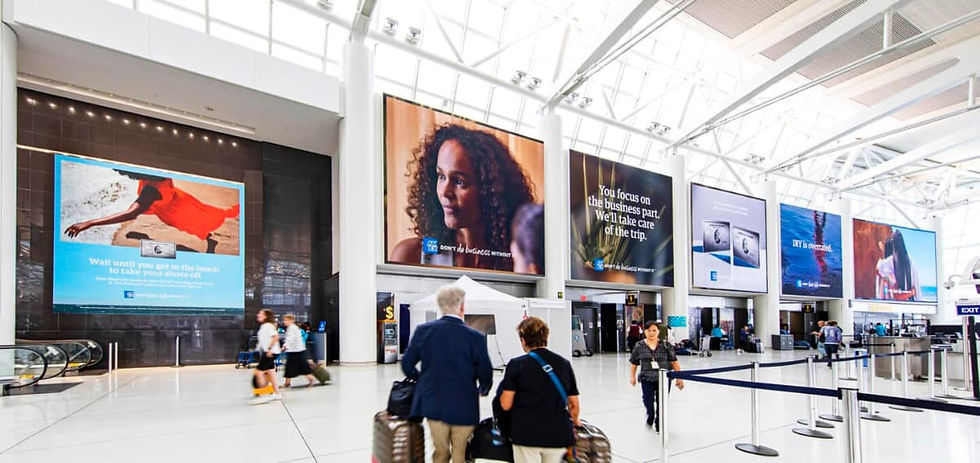
Digital airport advertising often supports broader airport campaigns.
It can be used to reinforce static placements, rotate multiple messages, or align content with travel timing. Digital formats work especially well when campaigns require adaptability.
For campaign structure and execution, review how to plan an airport advertising campaign → {How to Plan an Airport Advertising Campaign}. And to improve execution quality, follow airport advertising best practices.
Conclusion
Digital airport advertising and programmatic DOOH add flexibility, control, and measurement to airport campaigns. By using digital screens and automated buying, brands can deliver timely messages that match traveler movement and context.
When used correctly, digital airport advertising enhances visibility, supports premium positioning, and improves campaign effectiveness. Understanding how these tools work helps brands make better use of airport environments and create more relevant advertising experiences.


Comments